
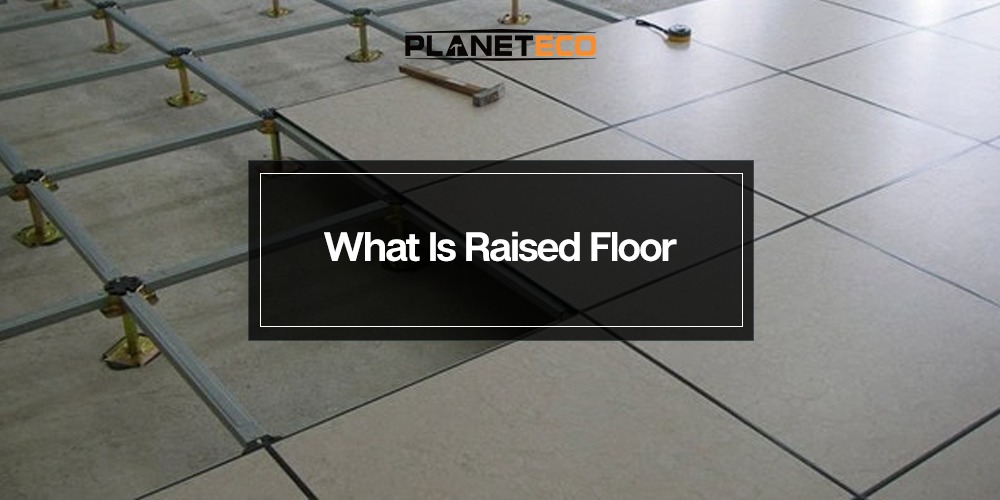
An access floor, also called a raised floor, is a type of flooring installed on top of the original concrete slab using adjustable pedestals and detachable panels. This raised structure makes a hidden area between the structural floor and the walking surface. This space can hold electrical wiring, data cables, HVAC systems, plumbing, and other building services.
A raised floor is a wise flooring choice that organises utilities and keeps the interior layout clean and adaptable.
In commercial offices, data centres, control rooms, and new residential buildings, raised floor solutions are becoming increasingly popular at Planeteco UAE.
How Does a Raised Floor System Work?
A raised floor system typically consists of three main components:
1. Pedestals
Adjustable steel or aluminium supports are fixed to the structural slab. They determine the height of the raised floor.
2. Stringers (Optional)
Horizontal supports connecting pedestals for added stability.
3. Floor Panels
Removable panels (usually 600×600 mm) made from steel, calcium sulphate, wood core, or cementitious materials.
The space created beneath the panels allows easy access to cables and mechanical systems. This makes maintenance faster and more cost-effective especially in tech-driven buildings across the UAE.
Why Is Raised Flooring Important in the UAE?
In the UAE, especially in cities like Dubai and Abu Dhabi, businesses and offices need premises that are flexible, cool, and equipped with modern infrastructure. Raised floors give:
- Efficient cable management
- Improved airflow and cooling
- Easy upgrades and reconfiguration
- Professional and clean aesthetics
- Faster maintenance access
Raised floors improve airflow and cooling performance in offices, IT rooms, and data centres operating in hot environments.
Where Are Raised Floors Commonly Used?
1. Office Buildings
Modern corporate offices require frequent layout changes. Raised floors allow easy relocation of workstations and power/data points without major construction work.
2. Data Centres
Raised floors are essential in data centres for airflow management and cable organisation. Cold air is distributed under the floor to cool servers efficiently.
3. Control Rooms
Security control rooms and monitoring centres rely on organised cable systems to ensure uninterrupted operations.
4. Commercial Spaces
Banks, hospitals, and telecom facilities use raised flooring to manage complex infrastructure systems.
Types of Raised Floor Systems Available in the UAE
1. Steel Encapsulated Panels
Durable and commonly used in offices. Ideal for moderate load requirements.
2. Calcium Sulphate Panels
High strength and excellent fire resistance. Suitable for heavy-duty applications.
3. Cementitious Core Panels
Strong and moisture-resistant, perfect for humid environments.
4. Wood Core Panels
Cost-effective option for light commercial usage.
At Planeteco UAE, selecting the right raised floor depends on load requirements, building type, humidity levels, and design preferences.
What Are the Key Benefits of Raised Floors?
Improved Cable Management
All wiring runs beneath the floor, eliminating visible cables and reducing trip hazards.
Better Cooling Efficiency
In data centres, raised floors enable underfloor air distribution, improving energy efficiency.
Flexible Office Design
Businesses can reconfigure layouts without breaking walls or floors.
Easy Maintenance
Panels are removable, allowing quick access for repairs or upgrades.
Enhanced Safety
Fire-resistant panels and organised wiring reduce risk.
Raised Floor vs Traditional Flooring: What’s the Difference?
Feature Raised Floor Traditional Floor
Cable Access Easy access under panels Requires drilling or trenching
Flexibility: Highly flexible, Fixed layout
Installation Cost: Higher initial cost, Lower upfront cost
Long-Term Value High Moderate
While raised floors may have a higher initial installation cost, they offer long-term operational savings and flexibility.
Is Raised Flooring Suitable for Residential Projects?
Yes, some modern villas and smart homes in the UAE use raised flooring to conceal cabling for smart lighting, home theatres, and automation systems. But they are most widespread in businesses.
How High Is a Raised Floor?
The height of a raised floor system typically ranges from:
- 50 mm to 150 mm for office spaces
- 300 mm to 1200 mm for data centres
The required height depends on cable volume, airflow needs, and building design.
Why Choose Planeteco UAE for Raised Floor Solutions?
We at Planeteco UAE know what modern commercial buildings need in terms of infrastructure. If you require raised floor systems for offices, IT rooms, or data centres, it’s important to choose the correct material and load capacity.
We focus on:
- Quality materials suitable for the UAE climate
- Durable and fire-resistant panel options
- Professional guidance for commercial applications
- Reliable supply solutions across the UAE
Final Thoughts:
If you need a flexible, well-ventilated system that handles cables better, a raised floor system is a good investment. As the UAE’s business environment continues to grow rapidly, raised flooring is becoming a common choice for modern buildings.
If you’re planning to build a commercial office, data centre, or control room, it’s important to understand what a raised floor is and how it works so that you can make an informed decision.
Planeteco is dedicated to providing stable, long-lasting flooring solutions tailored to your project’s needs. They can help you with raised floor systems in the UAE.